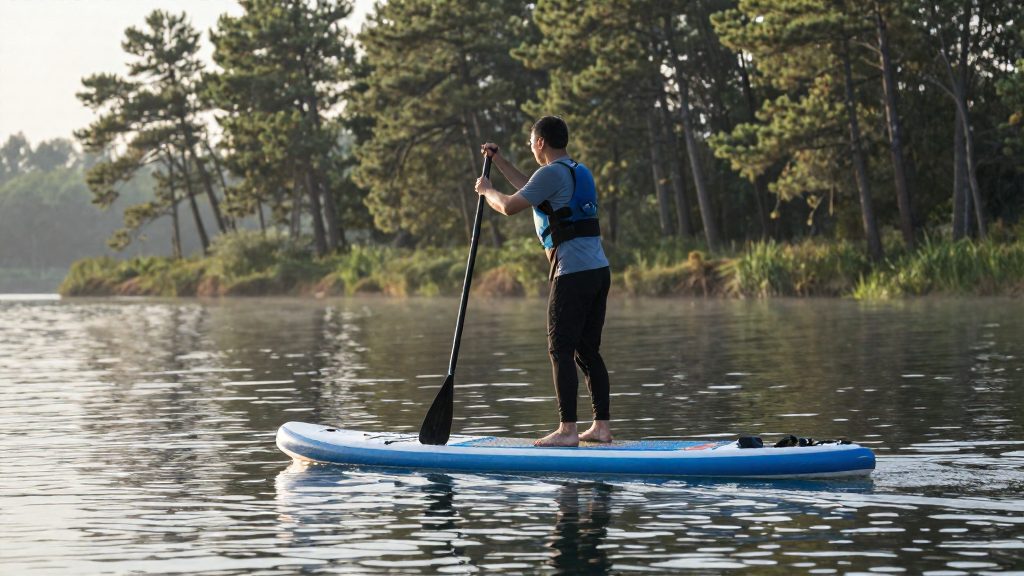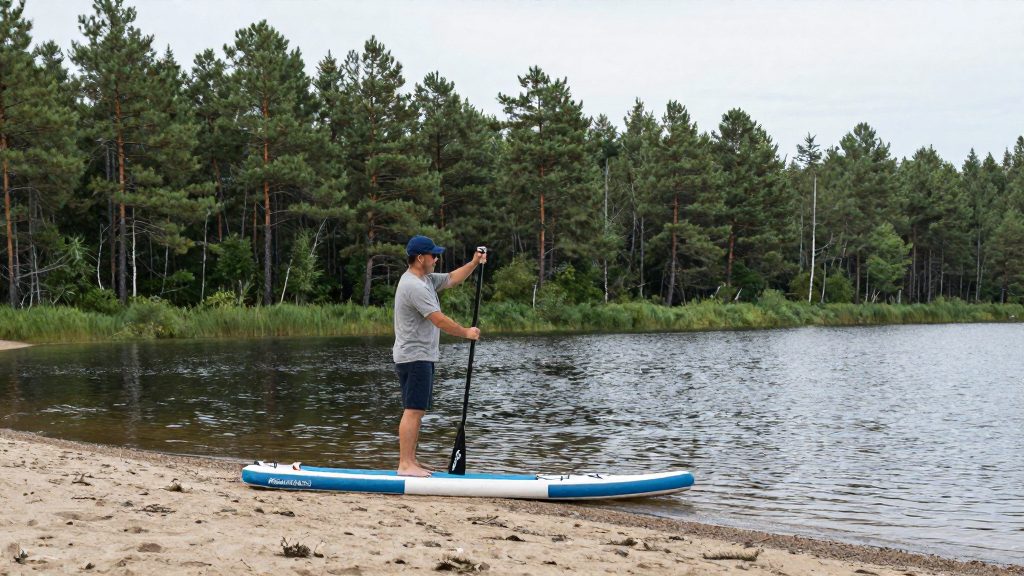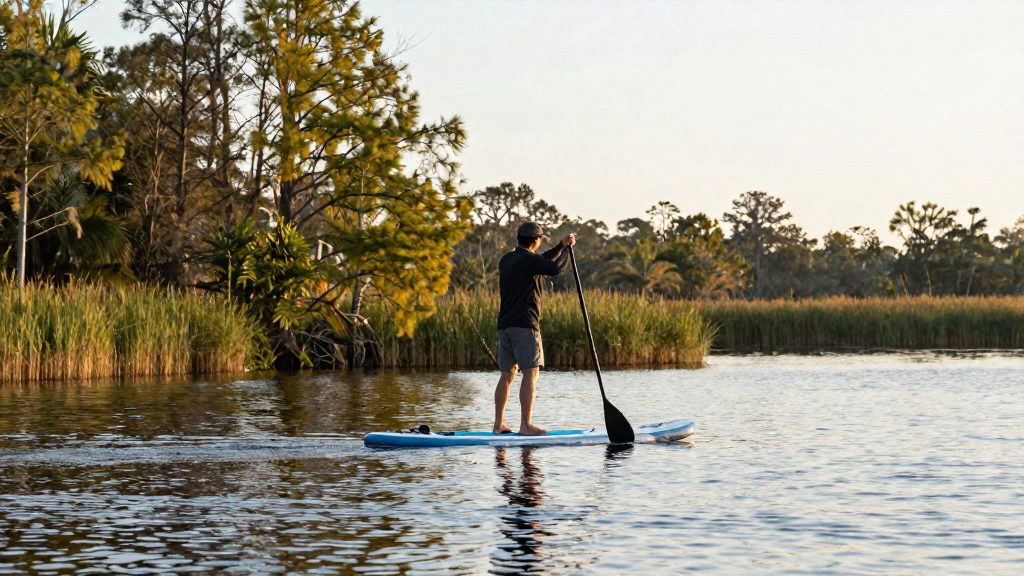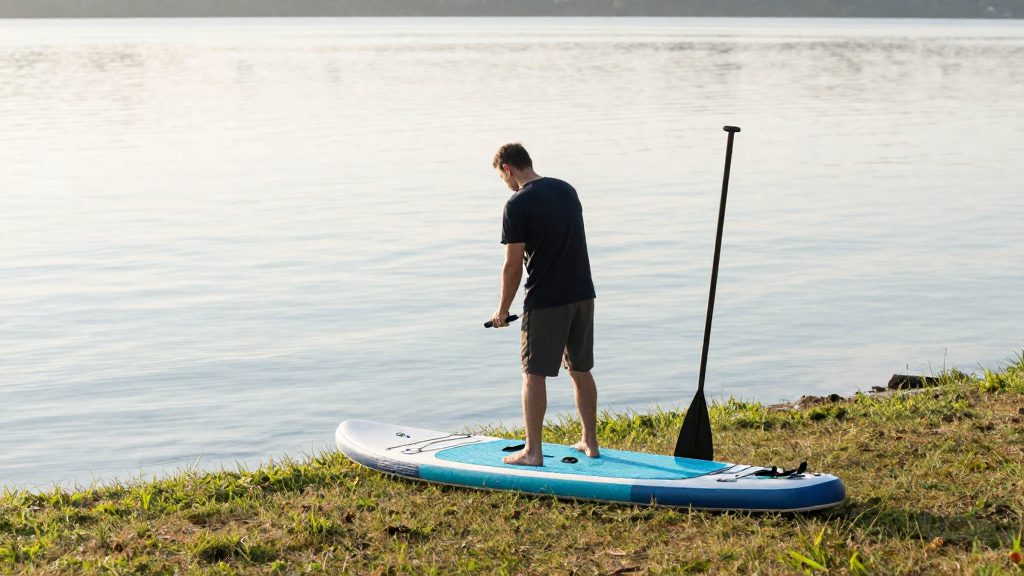
The WULF Aero 10′4″ is a sensible starting point for a beginner planning recreational paddling with a single rider. Consider the WULF Aero 11′4″ for a higher listed carrying capacity, or the Breeze Aero 11′6″ if accessory mounting matters. The best inflatable paddle board for beginners should fit your body, your launch routine, and the paddling you actually intend to do.
Compare beginner paddle board options
These specifications come from the current manufacturer pages for the WULF Aero and Breeze Aero.
| Exact model | Width | Thickness | Listed capacity | Average board weight | Listed loaded bag weight |
|---|---|---|---|---|---|
| WULF Aero 10′4″ | 34 inches | 6 inches | 250 lb | 20 lb | 29 lb |
| WULF Aero 11′4″ | 34 inches | 6 inches | 315 lb | 22 lb | 32 lb |
| Breeze Aero 11′6″ | 34 inches | 6 inches | 315 lb | 22 lb | 28 lb |
The larger WULF and Breeze have matching capacity ratings despite different lengths. Extra length alone therefore does not establish greater carrying ability. Likewise, matching dimensions cannot tell you which board will feel stiffer under your feet or easier to remount. A rental or demonstration is useful for answering those questions.
These are all-around options for relaxed paddling. Their specifications support a comparison of size and equipment; your comfort on the water still needs a practical assessment.
How do you choose the right size for your weight?
Start with your entire carried load: your body, clothing, drinking water, dry bag, and anything else resting on the board. Compare that total with the capacity of the exact size you are ordering.
For these board families, the manufacturer’s sizing guidance recommends moving to a higher-capacity board when your intended load is within 50 lb of the published capacity. This is a manufacturer-specific recommendation, rather than an industry-wide formula.
Width affects balance, while length influences maneuverability and glide. More width can provide a steadier platform, but it can also make reaching the water with the paddle less convenient. Consider your shoulder width and reach when comparing shapes.
During a demonstration, check whether you can paddle beside the rail without leaning awkwardly. Notice whether the standing area feels supportive under your normal stance. If your intended use includes yoga or fishing, assess usable deck space and equipment placement as well as the headline dimensions.
What does each package actually include?
The WULF Aero package lists an adjustable aluminum paddle, coiled leash, removable center fin, repair kit, hand pump, and fabric backpack.
The Breeze Aero package lists an adjustable paddle, removable center fin, repair kit, hand pump, backpack, and slide-in accessory-rack receivers. Its standard included-items list does not list a leash. Receivers are mounting hardware; check the separate compatibility information before ordering a rack.
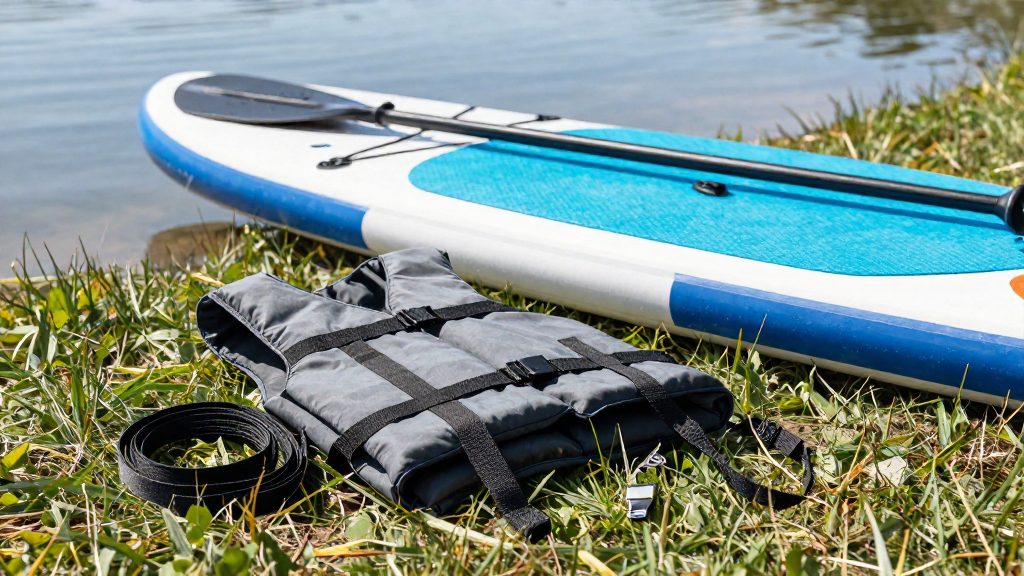
Neither standard list includes a life jacket. Also distinguish the standard board kit from promotional bundles: the pictures may show optional equipment.
Before checking out, ask:
- Can the paddle adjust comfortably to your height, and does its clamp stay secure?
- Can you obtain the correct replacement fin and pump adapter?
- Are the accessories shown on the selected order actually included?
- Does the seller provide operating instructions and a clear warranty process?
These questions identify missing equipment before delivery, when it is easier to correct the order.
Why does the trip from your car matter?
Assess the full route to the launch: parking, stairs, uneven ground, gates, and the return walk when you are tired. The packed weights in the comparison table are more useful for that walk than board-only weights.
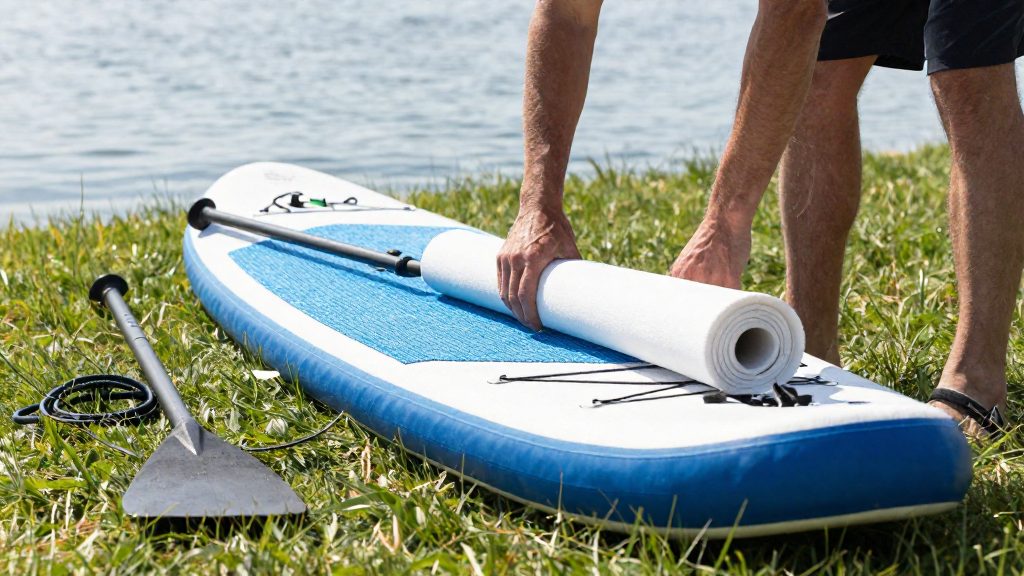
Try lifting a loaded demonstration bag onto your back and setting it down under control. Check whether its straps fit you and whether the packed shape fits your vehicle and storage space. If you plan to inflate beside the car, test whether you can comfortably hold the inflated board’s center handle and carry the board without dragging it.
Plan where you will handle the board at home, too. Compact storage still requires enough clear space to unpack and prepare your equipment. If your vehicle, carrying ability, or available workspace makes ownership impractical, include a launch-side rental in your comparison.
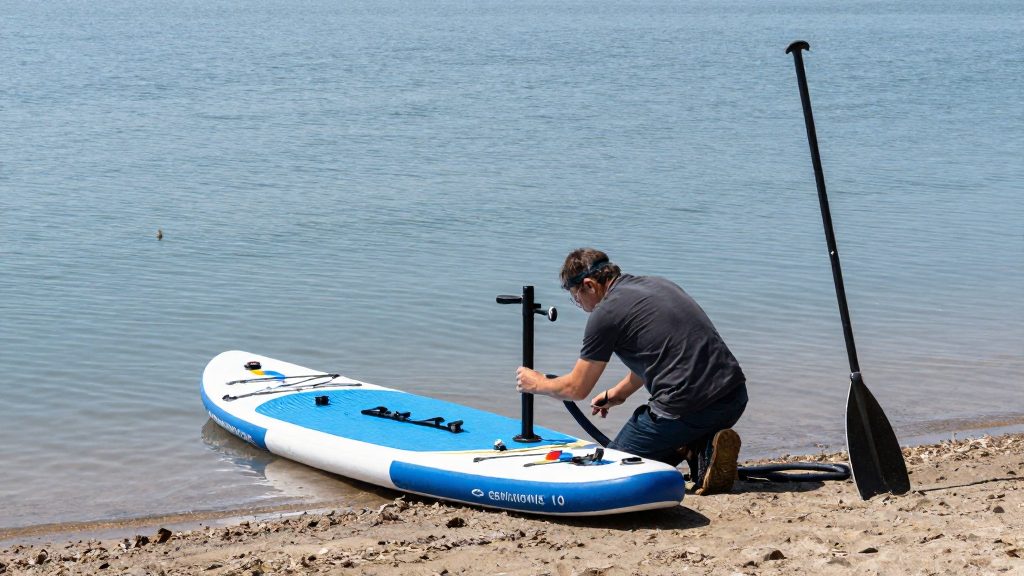
How should you inflate the board before launching?
The listed operating range for these models is 10–15 PSI, according to the manufacturer’s inflation instructions. PSI measures air pressure. Follow the instructions supplied with your particular board if they differ.
Use this sequence:
- Unroll the board on a clean surface and inspect it for damage.
- Put the inflation valve pin in its raised, closed position.
- Attach the hose to the pump’s inflation port and secure its valve connection.
- Inflate while watching the gauge.
- Disconnect the hose, replace the valve cap, and install the fin as instructed.
With the supplied dual-action hand pump, pumping in both directions fills the board initially; switching to single action makes the final stage more manageable.
A board that feels firm is not necessarily at operating pressure. The maintenance guidance explains that the included hand-pump gauge may not register until approximately 7 PSI. If the gauge remains unresponsive, check the connections and troubleshoot before continuing. Do not keep pumping indefinitely.
What safety equipment should a U.S. beginner add?
According to the U.S. Coast Guard’s boating FAQ, a SUP used beyond the narrow limits of a swimming, surfing, or bathing area is treated as a vessel. Carry an appropriately sized, serviceable, Coast Guard-approved wearable life jacket for each person. The Coast Guard recommends wearing it whenever underway.
For learning, a properly fitted foam paddling life jacket provides buoyancy without an inflation mechanism. Check that you can move your arms freely while its straps keep it from riding up. The Coast Guard’s life jacket guidance explains how to check fit and the limitations of different designs.
Attach a whistle where you can reach it and carry a waterproof means of calling for help. Check the state boating authority’s equipment requirements and any additional requirements for the water you will use.
Choose a leash for the water environment
The American Canoe Association’s SUP leash guidance identifies coiled or hybrid leashes as suitable for flatwater use. A leash helps keep the board from escaping after a fall.
Moving water introduces an entanglement hazard: a leash can snag on branches, rocks, or shore features. Do not transfer a lake setup to a river without appropriate instruction and an environment-specific assessment. The association specifies a reachable, waist-mounted quick release when a paddler makes an informed decision to use a leash in moving-water rivers.
Dress for immersion
The National Weather Service advises dressing for water temperature rather than air temperature. Cold immersion can disrupt breathing and reduce your ability to act even when the day feels warm.
Choose appropriate immersion clothing, such as a suitable wetsuit or dry suit, with advice from a qualified paddling instructor. A dry bag holding spare clothing cannot protect you while you are in the water.
When is a launch suitable for your first outing?
Choose sheltered, calm water with an easy landing and little boat traffic. Check the forecast for the entire outing, including gusts, thunderstorms, and changing wind direction. At a coastal location, investigate tidal currents as well as tide height.
The Professional Stand Up Paddle Association’s instruction guidance (2019) emphasizes evaluating weather, currents, waves, and vessel traffic together. Ask a local instructor whether the launch suits your present ability. Have an alternative location or postpone if it does not.
Avoid wind that carries you away from a safe landing. Leave your route and expected return with a responsible person, and paddle with a capable companion.
Launch only where the fin clears the bottom. Begin kneeling, then move into water deep enough for safe practice before standing. Place your feet parallel near the center handle, soften your knees, and look toward the horizon. Practice stopping and turning close to the launch before extending the outing.
Can you get back aboard after falling?
Make remounting part of an instructed demonstration, wearing the equipment you intend to paddle in. Staying upright during a showroom balance test cannot answer this question.
The Academy of Surfing Instructors (February 7, 2026) explains that dangling your legs beneath the board makes it harder to lift your chest onto the deck. Extend your legs behind you and kick as you pull your chest across the rail, then bring your legs aboard.
Practice in controlled conditions with supervision. If your life jacket catches on the rail, work with the instructor on your approach while keeping it on. Difficulty remounting is a reason to adapt the equipment or technique before going farther.
When falling, aim away from the board and land flat rather than diving or jumping feet first. If you cannot remount reliably, continue with supported instruction before attempting an independent trip.
How do you care for the board after paddling?
Follow the manufacturer’s inflatable-care instructions:
- Rinse away salt, sand, and debris with fresh water.
- Clean the deck pad gently rather than grinding dirt into its surface.
- Let the board dry completely before packing.
- Store it somewhere cool, dry, and protected from direct sunlight.
- If storing partially inflated, reduce pressure as directed.
Sun exposure can weaken materials and seams while heat raises internal pressure. Move an inflated board into shade when it is out of the water and not being used. Keep the manufacturer’s packing instructions with the bag so anyone sharing the board follows the same routine.
Frequently asked questions
Do inflatable paddle boards need registration or a launch permit?
Requirements depend on the state and launch site. New York State Parks says manually propelled paddle boards do not require registration in New York. Pennsylvania’s Fish and Boat Commission requires registration or a launch permit for access to its launch areas and Pennsylvania state park launch areas. Check the authority responsible for your destination.
Can I repair an air leak myself?
Locate the leak using the manufacturer’s approved procedure before choosing a repair. A small puncture may be suitable for an approved patch; valve problems, seam damage, and substantial tears require different assessment. Follow the specified adhesive and curing instructions, then verify that the board holds its operating pressure before returning to the water.
Is a boating safety certificate required for a paddle-only SUP?
Check the rules where you will paddle. New York State Parks recommends a boating safety certificate but does not require one for manually propelled craft. That exemption is specific to New York; other jurisdictions and individual facilities may have different requirements.