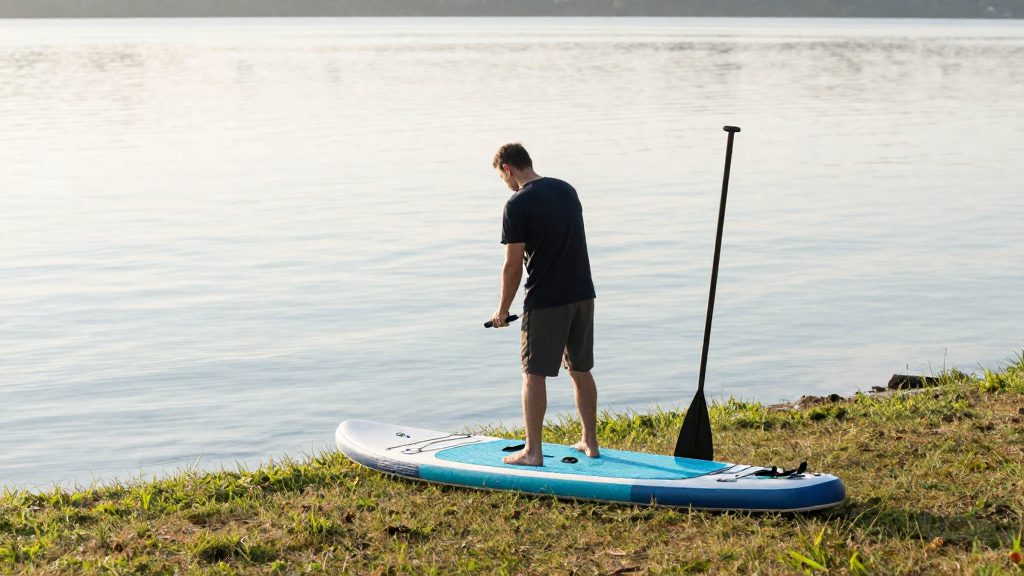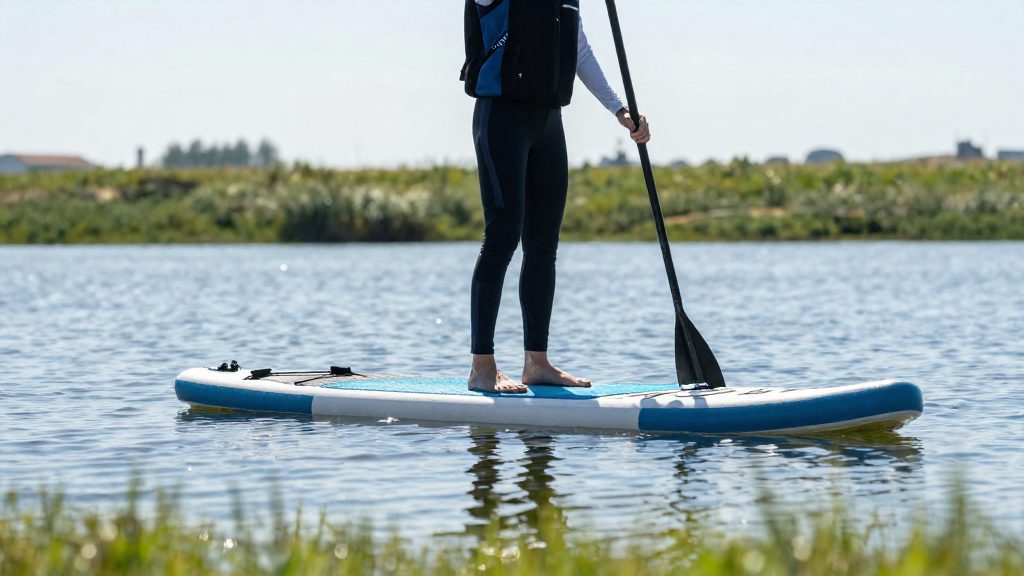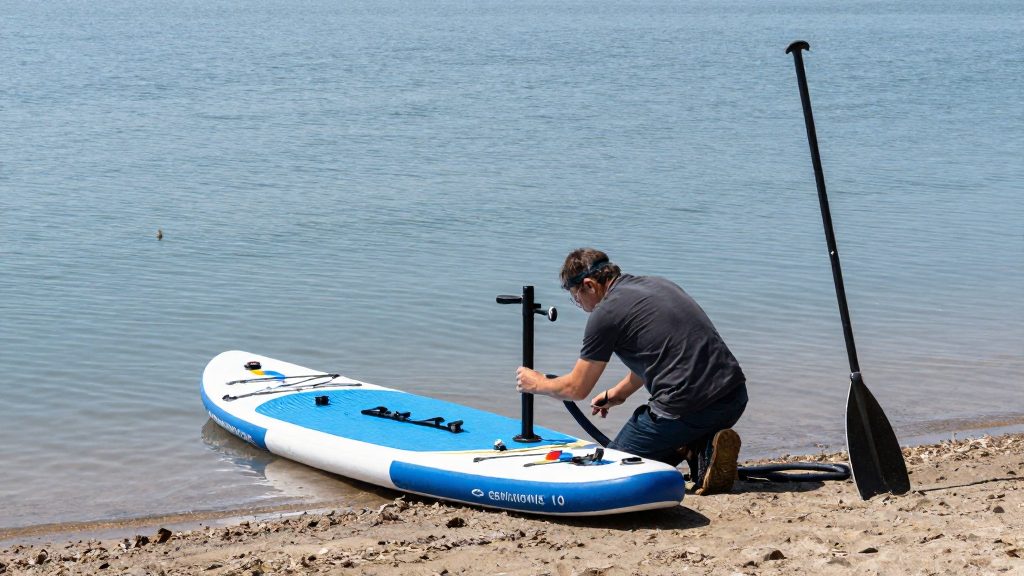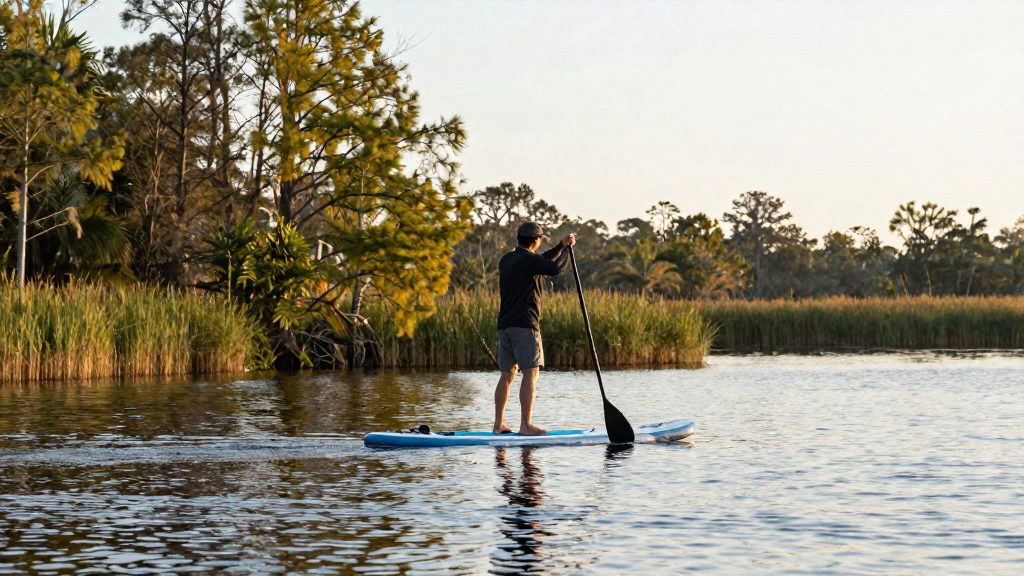
Western Lake at Grayton Beach State Park is the best overall pick for calm-water paddleboarding in Florida. Dixie Lake is a strong alternative near Orlando, while Campbell Lake suits visitors who want to rent equipment. Lake Ivanhoe offers an urban launch, Okeeheelee Park provides a South Florida option, and Lake Powell rewards paddlers seeking a more varied coastal-lake outing. The most suitable choice depends on your equipment, experience, and the conditions during your visit.
Which Florida lakes are the best choices?
For a beginner planning a destination outing, start with Western Lake, then consider Dixie Lake or Campbell Lake according to whether you own equipment. The remaining choices serve more specific travel plans.
| Lake | Florida location | Best match | Main planning consideration |
|---|---|---|---|
| Western Lake | Grayton Beach, Panhandle | Best overall beginner destination | Choose a manageable section of its winding shoreline |
| Dixie Lake | Clermont, Central Florida | Best for bringing your own board near Orlando | Use the designated day-use access |
| Campbell Lake | Santa Rosa Beach, Panhandle | Best for a rental-based nature outing | Arrange equipment through the park |
| Lake Ivanhoe | Orlando | Best for an urban practice session | Check the launch and surrounding boat activity |
| Okeeheelee Park freshwater fishing lake | West of West Palm Beach | Best South Florida option to investigate | Confirm current SUP access with park staff |
| Lake Powell | Camp Helen, near Panama City Beach | Best for paddlers progressing toward touring | Keep the route within the lake and assess its outfall |
Western Lake: the strongest overall recommendation
Florida State Parks describes Western Lake as a 100-acre coastal dune lake with calm water suitable for paddlers across experience levels. Paddleboard and kayak rentals are available through the park’s supporting organization. Those features make it the clearest starting point for a visitor choosing a Florida lake specifically for a relaxed SUP outing. Florida State Parks: Paddle Western Lake.
Its shape adds practical value. The Florida Department of Environmental Protection describes numerous inlets and a meandering shoreline, giving paddlers opportunities to explore without treating the lake as a destination that must be crossed from end to end. Use the park launch, identify recognizable shoreline landmarks, and choose a route you can retrace comfortably. Florida DEP: Saltwater Paddling in Florida State Parks.
Dixie Lake: a practical choice for board owners
At Lake Louisa State Park, navigate specifically to the Dixie Lake day-use area. Florida State Parks lists a canoe/kayak launch, restroom, picnic facilities, and a fishing dock there. Keep your launch approach clear of people fishing from the dock.
Visitors may bring small vessels that can be hand-carried to the water. Gas-powered motors are prohibited, although electric trolling motors are permitted. That distinction makes Dixie appealing if you want to reduce exposure to engine-powered recreation without assuming that every other vessel will be paddle-powered.
An inflatable board is convenient here when you can carry it comfortably between your vehicle and the shoreline. Assemble it away from the launch so other visitors retain access. The park also rents canoes and kayaks at Dixie Lake; contact the park separately if you need a paddleboard. Florida State Parks: Lake Louisa Experiences and Amenities.
Campbell Lake: plan around the equipment rule
Campbell Lake lies within Topsail Hill Preserve State Park, surrounded by dunes and maritime forest. Its main logistical difference is unusually important: outside boards and paddling accessories cannot be used. The restriction includes personal canoes, kayaks, paddleboards, paddles, and life jackets because equipment can introduce nonnative plants.
The park offers rental paddleboards with paddles and life jackets. Before traveling, ask about availability, equipment sizing, and how renters reach the lake launch. If your life jacket requires a particular fit or accommodation, discuss that before arrival instead of assuming you can substitute your own.
Choose Campbell when you want a lake-focused nature outing without transporting a board. If bringing personal equipment is essential to your trip, select another destination. Florida State Parks: Paddling at Topsail.
Lake Ivanhoe: convenient access within Orlando
Gaston Edwards Park is the relevant starting point for Lake Ivanhoe. The University of Central Florida’s Recreation and Wellness Center identifies a paddleboard-specific launch dock in its 2021 urban recreation guide. Because that description documents an existing facility rather than its condition today, confirm that the dock remains open before building your outing around it. University of Central Florida: Urban Exploration.
A dock launch requires a different approach from a beach launch. Inspect the height and footing, place the board where it will not catch beneath the structure, and begin kneeling if standing immediately would compromise your balance. Leave room for returning paddlers to get out.
Ivanhoe makes sense for practicing starts, stops, and controlled turns during a city visit. Watch the water beyond the dock before committing to a longer route; convenient access does not establish priority over other lake users.
Okeeheelee Park: choose the freshwater fishing lake
Okeeheelee contains separate water-recreation areas. Palm Beach County lists a nonmotorized launch on the freshwater fishing lake, along with canoeing/kayaking access, parking, and restrooms. Its water-ski lake ramps serve a different activity. Confirm with park staff that paddleboards are currently accepted at the fishing-lake launch and request directions to that specific location. Palm Beach County: Okeeheelee Park.
The county’s park map marks the fishing-water area for trolling or nonmotorized boats and prohibits combustible engines. This provides a useful distinction when selecting a lake for a quieter paddling session, while allowing for electric-powered fishing boats. Palm Beach County: Okeeheelee Park Map.
When approaching anglers, keep clear of lines and leave space around occupied fishing positions. Set your route around available water rather than cutting between a boat and the shoreline it is fishing.
Lake Powell: a progression toward longer outings
At Camp Helen State Park, Lake Powell supports paddleboard rentals and allows personal equipment. Florida State Parks identifies a public kayak launch at the North Trail trailhead, with a hard-surface approach of approximately 375 feet between parking and the water. A board cart can make that carry easier. Florida State Parks: Kayaking and Paddleboarding at Camp Helen.
This coastal dune lake has an outfall that can connect it with the Gulf. When open, the connection allows water exchange influenced by tides and wind. For a calm-water SUP outing, ask park staff about the outfall’s current condition and stay away from any moving-water connection. Rental equipment is restricted to the lake. Florida State Parks: Lake Powell at Camp Helen.
Powell is a better choice after you can steer accurately and judge your return effort. Build your outing around a defined lake-side destination rather than an open-ended exploration.
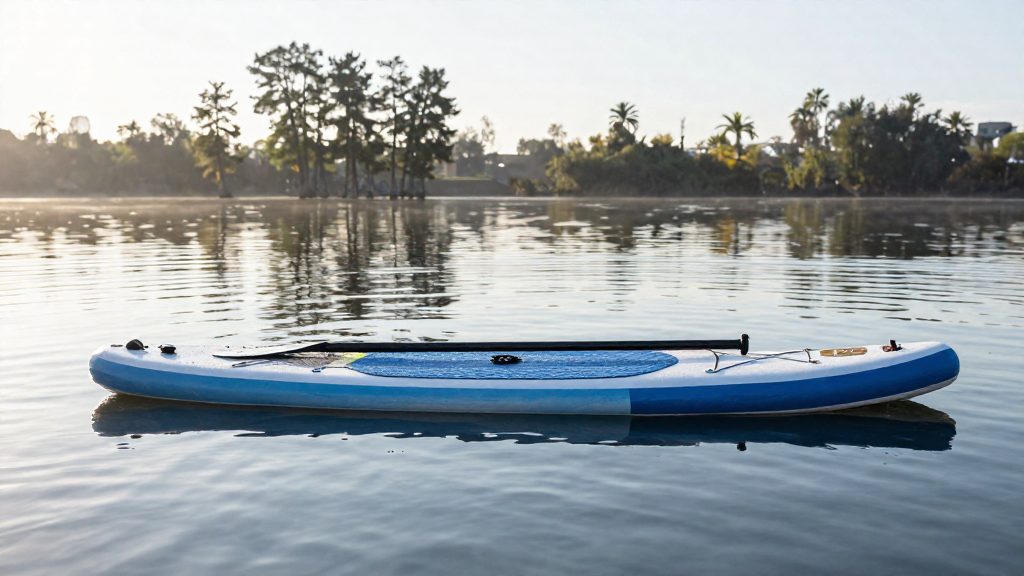
How should you choose a sheltered route?
Wind exposure matters more than a lake’s reputation. Fetch means the uninterrupted distance wind travels across water: a long open stretch gives waves more room to develop. A protected launch can therefore look comfortable while the middle of the same lake is choppy.
Use this sequence to assess your route:
- Read the wind direction on a map. Find the shore the wind is blowing from. Nearby water may have less wave development, but wind blowing away from that bank can still carry you outward.
- Identify usable exits. A visible shoreline is not necessarily somewhere you can land. Dense plants, private docks, retaining walls, and steep banks can prevent an easy exit.
- Test your return ability near the launch. Paddle against the wind before traveling farther. If you cannot hold your course comfortably, shorten the outing or stay ashore.
- Keep the route reversible. Avoid committing to a crossing that puts the return launch beyond your current ability.
For your first sessions, choose a paddling companion who can stay with you and an instructor who can teach remounting before you attempt independent lake exploration. Florida’s Fish and Wildlife Conservation Commission recommends paddling with others, checking equipment, and leaving a float plan with someone ashore. FWC: Human-Powered Vessels.
When should you paddle for the best conditions?
Look for a daylight weather window with light winds, manageable gusts, and no approaching thunderstorms. An earlier outing can fit that pattern, but the hourly forecast and radar should determine the departure time.
Florida’s summer storm timing varies with the wider weather pattern. National Weather Service guidance explains that some patterns favor afternoon and evening thunderstorms, while others bring activity toward the west coast during the morning. A morning reservation should therefore remain conditional on that day’s forecast. National Weather Service Tampa Bay: Summer Weather Guidance.
Check the forecast for the actual lake, including conditions expected through your return. Stronger gusts, a wind shift, or an approaching storm can change the outing even when the average wind looks acceptable. There is no universal wind-speed limit that makes every beginner, board, and route equally suitable.
If thunder occurs, leave the water and reach a substantial building or enclosed vehicle. An open picnic pavilion does not provide adequate lightning shelter. The National Weather Service advises waiting 30 minutes after the last thunder before resuming outdoor activity; reassess the remaining weather window before relaunching. National Weather Service: Lightning Safety Outdoors.
What equipment belongs on a Florida lake outing?
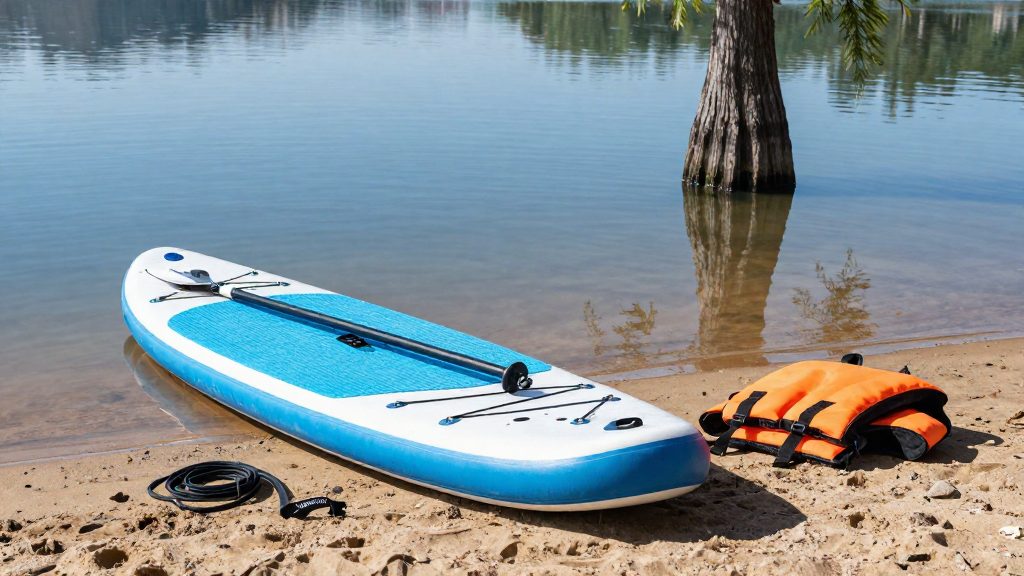
Outside designated swimming, surfing, or bathing areas, Florida treats paddleboards as vessels. FWC lists a U.S. Coast Guard-approved wearable life jacket for each person and an effective sound-producing device among the requirements. Children under 6 must wear their life jackets; FWC recommends that everyone wear one. Attach a suitable whistle where you can reach it while floating. FWC: Human-Powered Vessels.
For an ordinary lake session, also prepare:
- A suitable SUP leash: follow the leash manufacturer’s instructions for the environment. Moving water and entanglement hazards require a different assessment from unobstructed flatwater.
- A protected phone: secure it on your person in a waterproof case you can operate when wet.
- Drinking water and sun protection: carry them where they will not interfere with your stance or remount.
- A checked board and fin: inspect fittings, secure the paddle adjustment, and inflate an inflatable board according to its manufacturer’s specified pressure.
If wind increases unexpectedly, lower your stance by kneeling and head toward a safe exit while you still have control. Gear should support an achievable route, with space on the deck for getting back aboard.
Which wildlife and water-quality checks matter?
Treat alligator awareness as part of freshwater trip planning. Give animals room, never feed them, and abandon a launch if an alligator is lingering where you would enter the water. FWC notes that alligators are most active between dusk and dawn, which supports choosing full daylight for beginner outings. FWC: Tips to Safely Co-exist With Alligators.
Check posted closures and Florida’s water-quality resources before launching. Blue-green algae can produce toxins, and appearance alone cannot establish whether a bloom is toxic. If the launch has scum, floating mats, suspicious discoloration, or an algae warning, choose another location rather than planning to avoid falling in. Paddleboarding involves foreseeable water contact. Protecting Florida Together: Blue-Green Algae.
Frequently asked questions
Do I need a fishing license to fish from a paddleboard?
Generally, yes, unless an exemption applies. The required license depends on the species you target, including on brackish lakes. Check FWC’s fishing participation requirements before bringing fishing tackle.
Does a recreational paddleboard need Florida registration?
Typical short, nonmotorized recreational SUPs are exempt. Adding a motor can change registration and title requirements. Check your particular setup against FWC’s human-powered vessel rules.
How should I prepare my board before visiting another lake?
Remove plants, animals, and mud; drain trapped water; and dry the board and accessories completely. Inspect the fin box and leash attachment carefully. Follow FWC’s clean, drain, and dry guidance and any destination-specific equipment restrictions.