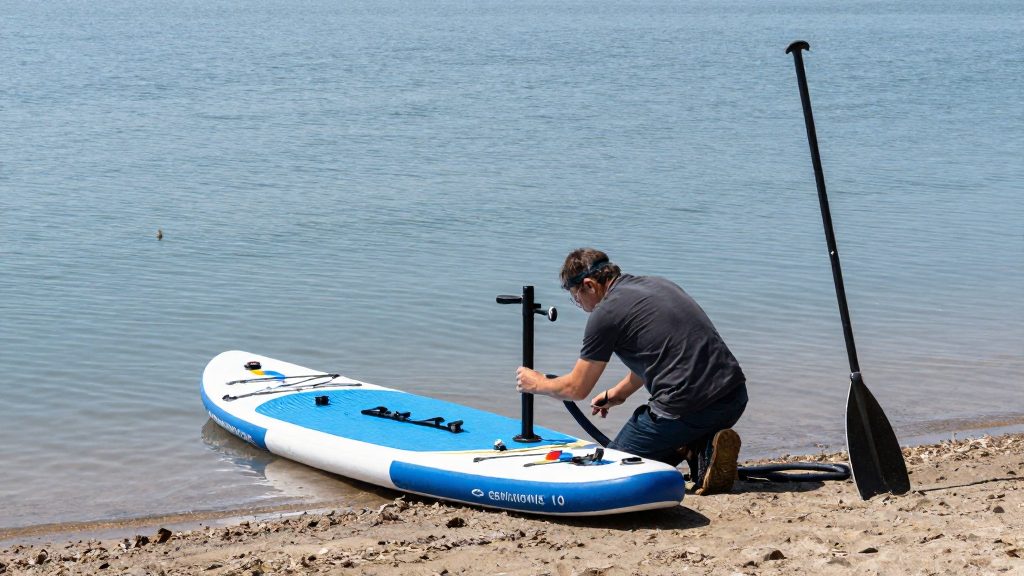
Choose a hand pump for power-independent inflation and an electric SUP pump when reducing physical effort is the priority. Electric does not automatically mean faster: compare the time needed to reach your own board’s required pressure, including setup and cooling breaks. Keeping a working hand pump alongside an electric unit also provides a fallback if electrical inflation becomes unavailable. See the manufacturer’s pump guide.
What specifications should you check before choosing?
An inflatable stand-up paddleboard needs a pump that can both move air into its large chamber and reach its working pressure. Start with the board’s instructions, then check the pump’s documentation against this list.
| Specification | What to verify |
|---|---|
| Pressure capability | The pump reaches the board’s recommended operating pressure; the pump’s maximum rating is not an inflation target. |
| Valve connection | The supplied hose end and sealing gasket match the board’s valve. An assortment of adapters does not establish compatibility. |
| Pressure display | The gauge is readable, and its units match the instructions you will follow. |
| Electrical input | A corded pump labeled 12 V DC needs its approved power connection; a household outlet requires a suitable manufacturer-approved power adapter. |
| Complete carrying load | Compare the pump with its hose, adapters, cables, charger, and any separate battery included in what you will actually carry. |
The SUP owner’s manual distinguishes working pressure from maximum pressure. The electric pump specifications identify power accessories and packed equipment separately. Before buying, ask the seller to confirm any missing specification for the exact versions of your board and pump.
Where can you operate an electric pump?
A vehicle-powered pump ties inflation to a suitable electrical outlet and the reach of its cable and hose. Check where you can safely lay out the board before assuming a parking space will work as an inflation station. Follow both the pump instructions and the vehicle’s accessory-outlet requirements.
A pump with a built-in rechargeable battery can operate away from the vehicle. Other electric pumps accept a separate battery pack, which may be an optional accessory. Those arrangements are different: a power cable in the package does not mean a battery is included.
The electric pump guide published in 2019 describes both vehicle-connected and rechargeable configurations. For a launch reached on foot, verify the complete power arrangement before buying, including the charger and any required connecting cable.
Why isn’t an electric pump always faster?
Inflation has different demands as the board fills. Early on, the pump moves a large volume of air with little resistance. Later, it must continue delivering air against increasing pressure. A board that has taken shape has not necessarily reached its operating pressure.
Some electric SUP pumps use a high-volume stage followed by a high-pressure stage. A change in sound during that transition can therefore be normal. A headline airflow figure alone does not describe complete inflation performance: the manufacturer’s two-stage specifications list different airflow rates for the stages.
For a useful timing comparison, use the same board, starting condition, and final pressure. Include connecting the equipment and putting everything away. For several boards, read the pump’s continuous-runtime and cooldown requirements before planning the sequence. Required pauses count toward launch preparation; they are not optional delays to bypass. Battery endurance claims also need a comparable board and target pressure to be useful.
How do you make hand pumping manageable?
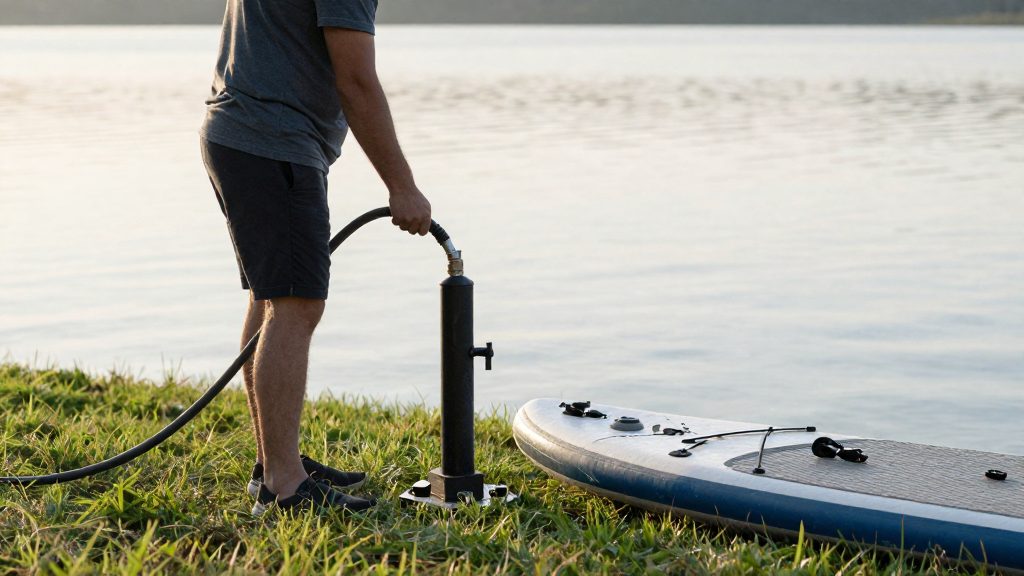
On a dual-action hand pump, air enters the board during both the upward and downward strokes. This helps fill the chamber initially, but pulling the handle upward becomes harder as resistance increases.
If the pump provides a single-action setting, switch according to its instructions when the upward stroke becomes difficult. That setting commonly concentrates inflation on the downward stroke. Follow the markings on your pump: the change may involve a selector or a removable plug, depending on its design.
Keep your feet on the pump’s supports and use smooth, controlled strokes. As resistance builds, bend your knees and use your legs rather than repeatedly hauling with your arms or rounding your back. Take breaks instead of exhausting yourself before paddling.
The hand-pump instructions describe changing from double to single action as resistance builds. The inflation technique guide recommends leg-driven pumping and rest breaks. Stop at the prescribed gauge reading rather than judging readiness by how firm the deck feels.
How do you connect the hose without losing air?
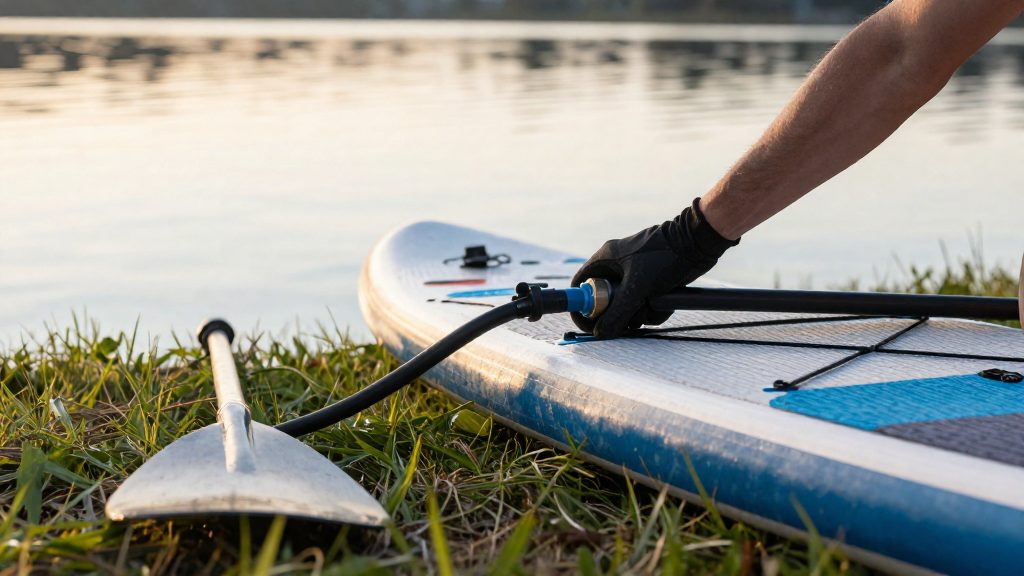
For a common recessed spring-loaded SUP valve, the central pin normally needs to be raised into its closed position before inflation. Incoming pressurized air opens the valve temporarily; the spring closes it again when pumping stops. Leaving that pin latched down can let the board empty when you disconnect.
Check your board’s valve instructions before touching the pin, since locking mechanisms vary. Lay the hose so it does not pull sideways on the fitting, then engage the connector as directed. The correct gasket should seal without improvised spacers or excessive force.
A loose connector or persistent hiss at the fitting calls for checking the adapter and washer, rather than increasing pumping effort. The manufacturer’s valve guidance explains pin position and gasket fit.
After inflation, remove the hose without pressing the valve pin and replace the protective cap. Sustained escaping air requires resolving the valve problem before launching.
How should you set and supervise an electric SUP pump?
Before starting, select the board’s prescribed pressure and confirm the displayed unit. Do not assume a remembered setting suits the next board. Automatic shutoff ends inflation at the selected target; it cannot make an incorrectly chosen target appropriate. The electric inflation guide describes selectable pressure and target-pressure shutoff.
Position the pump on a stable, dry surface, with its ventilation openings clear of sand and loose material. Protect it from rain and splash exposure according to its instructions. The pump care guidance identifies water and debris as concerns for electric equipment.
Stay close enough to monitor the display, hose connection, and board. Automatic operation is not permission to leave the equipment unattended. When inflation ends, verify the pressure using the manufacturer’s recommended method, stop the equipment, and disconnect its power supply. The electric pump operating instructions cover supervision and safe operation.
When should you stop and troubleshoot?
A pump that suddenly stops, runs without meaningful progress, or develops a leaking hose needs attention before inflation continues.
- Unexpected shutdown: Stop attempting restarts. Follow the specified cooling procedure and inspect for blocked ventilation before resuming.
- Slow inflation: Switch off and inspect the hose for cracks, obstruction, and poorly seated connections.
- Damaged equipment: Replace the damaged component or obtain service before using the pump again.
- Untrustworthy pressure reading: Do not keep adding air by feel. Resolve the gauge problem or use a compatible pressure gauge approved for the board.
The electric troubleshooting instructions identify overheating, damaged or blocked hoses, and incorrect connections as possible causes of failure.
For a hand pump, increasing friction or poor air delivery may indicate a dry barrel or a damaged or displaced internal seal. Check whether the manufacturer supplies replacement seals, a gauge, or a hose before replacing the entire assembly. The pump service guidance updated in 2025 explains these faults and component replacement. Use the specified parts and service procedure rather than improvising repairs.
What changes after inflation?
Temperature can change pressure after either type of pump has finished. An inflated board left in direct sun can warm up, so follow its heat-exposure and pressure-release instructions rather than treating the launch reading as permanent. Keep the board shaded while waiting.
Cold water can have the opposite effect: cooling air inside the chamber can reduce pressure and stiffness. If adjustment is necessary, return to a safe shore position and check the board according to its instructions before adding air.
A pressure change that continues without an explanation from temperature needs investigation for a leak. Do not repeatedly top off a suspect board and continue paddling. The owner’s temperature and troubleshooting guidance explains cooling-related softening and leak checks.
What maintenance keeps either option useful?
Inspect hoses and sealing rings for deterioration before packing. Keep grit out of the fittings, and protect the hand-pump handle from impacts and forced movements. The pump care guide identifies these inspection points.
Lubricate a serviceable hand pump only with the product its manufacturer specifies. Lubricant choice depends on the pump: a recommendation for another design may be unsuitable. Follow the model’s disassembly instructions and clean away debris as directed. See the manufacturer’s pump maintenance procedure.
If compact packing matters, verify whether your pump supports deflation. Some hand and electric pumps can extract residual air after the main release, but that capability is model-dependent. Use the designated port and board-approved folding procedure. Deflation capabilities are documented in the hand-pump service guide and electric pump specifications. Let an electric unit cool before bagging it, and follow its own battery charging and storage schedule.
Frequently asked questions
Can I use a SUP pump for an inflatable kayak?
Only when the pump and kayak manufacturers confirm compatibility. Kayak floors and side chambers may require different pressures, and some low-pressure chambers need a dedicated inflation gauge. A SUP-capable pump is not automatically suitable for every chamber. Check the manufacturer’s compatibility notes.
Can I use a tire or workshop compressor with a paddle board adapter?
Use a pump designed and approved for inflatable SUPs. A matching adapter does not make a tire or workshop compressor suitable; excessive pressure can cause chamber failure and injury. The manufacturer’s compressor warning explains the hazard.
Can I fly with a battery-powered SUP pump?
Check its battery’s watt-hour rating and confirm acceptance with the airline before packing. The Federal Aviation Administration recommends carrying eligible lithium-powered devices in accessible carry-on baggage. Spare lithium batteries must travel in carry-on baggage with protection against short circuits. Follow the FAA’s battery guidance and the airline’s restrictions.